


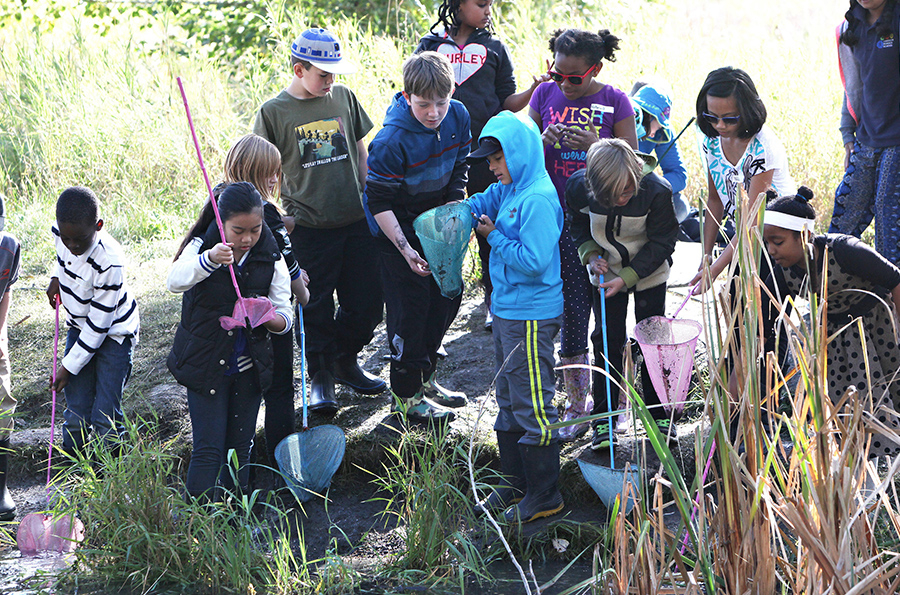
The Toronto WCE brings wetland exploration and stewardship to the urban centre of Toronto, introducing urban youth to nature that exists just beyond their doorstep.
Founded in 2025, the Toronto WCE program currently includes Mary Ward Catholic Secondary School in the Scarborough area. Mary Ward hosts a dynamic and vibrant learning community and is only steps away from L’Amoreaux North Park, which hosts an urban wetland. The school runs an extensive mentorship program. In this program, WCE students host younger students for a day of wetland games, activities, and nature walks. In 2024-25, over 100 high school students were trained to be wetland mentors and delivered education to 300 elementary students. The school also participates in national events through the WCE program as well as engaging in other community opportunities, such as a community wetland cleanup.
Toronto has lost over 85% of its original wetlands due to urban expansion. These ecosystems are critical for wildlife, plants, and humans. Over recent years, more concerted conservation efforts have been made leading to successes such as increasing river otter populations. Ducks Unlimited Canada plans to continue expanding educational offerings in Toronto to showcase the importance of urban wetlands and to offer wetland education to the diverse communities that call Toronto ‘home’.
/Toronto2.jpg)
/Toronto1.jpg)
Facts & Highlights
When L’Amoreaux North Park was being developed, the wetland site used by WCE, several longhouses were uncovered belonging to a Wyandot First Nations village. The area has long been a home to the traditional peoples of this land and the wetlands continue to play a significant role for the communities that occupy this area today.
- Established in 2025, composed of Mary Ward Catholic Secondary School
- The school uses L’Amoreaux North Park for their wetland programming
- Has an extensive mentorship program where high school students lead wetland activities
- Participate in national WCE events such as webinars
- Carry out field trips to other wetland and conservation-focused sites such as the Toronto Zoo